Understanding the Safety Zone


A Conversation Tool for Therapy

Purpose of this tool

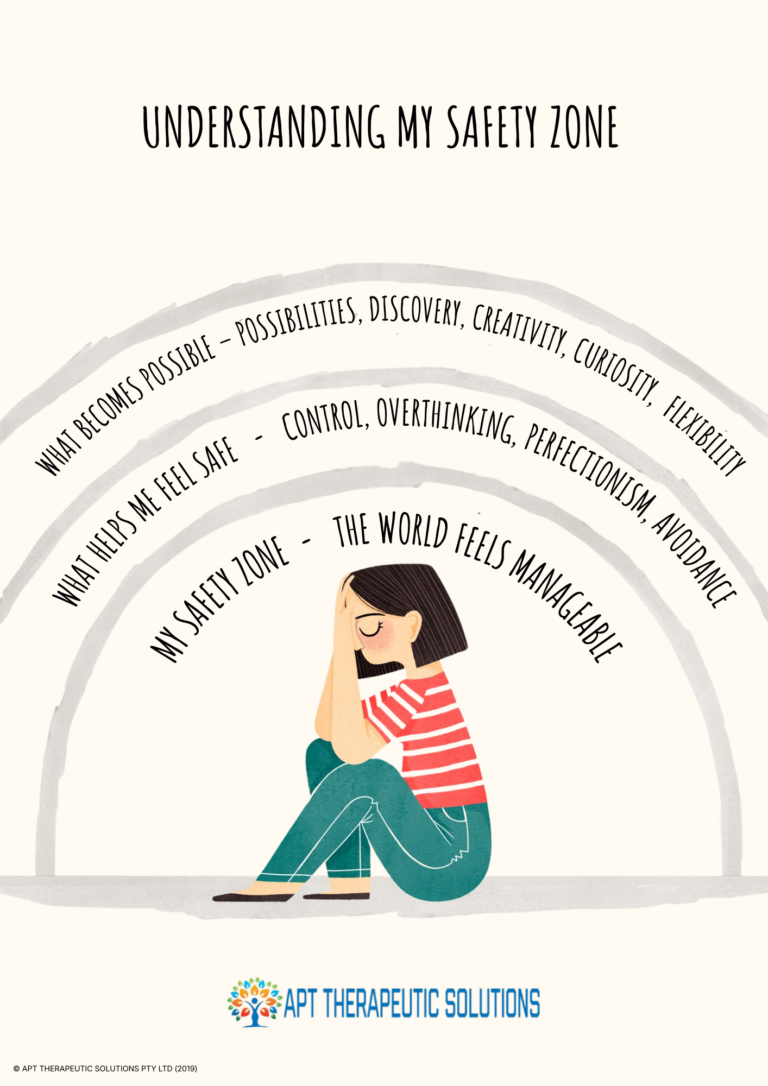
The Safety Zone visual is designed to help young people understand how anxiety can shape the way they think, feel, and respond to the world. The aim is not to remove protective strategies or push change too quickly. Instead, this tool supports young people to:

  • understand how protective strategies develop
  • recognise how these strategies help them feel safe
  • explore how their strengths can be used in more flexible ways
  • gradually expand what feels possible as safety grows.

These conversations are intended to be slow, collaborative, and non-judgemental. Safety comes
first.

How to use this resource
This tool includes:
✔ the Safety Zone visual
✔ a clinician instruction sheet with prompts for discussion

Please download both pages and laminate them together so the instructions sit on the reverse side of the visual for easy use in session.

We hope this resource supports meaningful conversations with the young people you work with.
If you find this tool useful, we’d love to hear about your experiences using it in practice.


Download the Safety Zone and start more meaningful, strengths-based conversations in your sessions today.
Life of Anorexia Tool

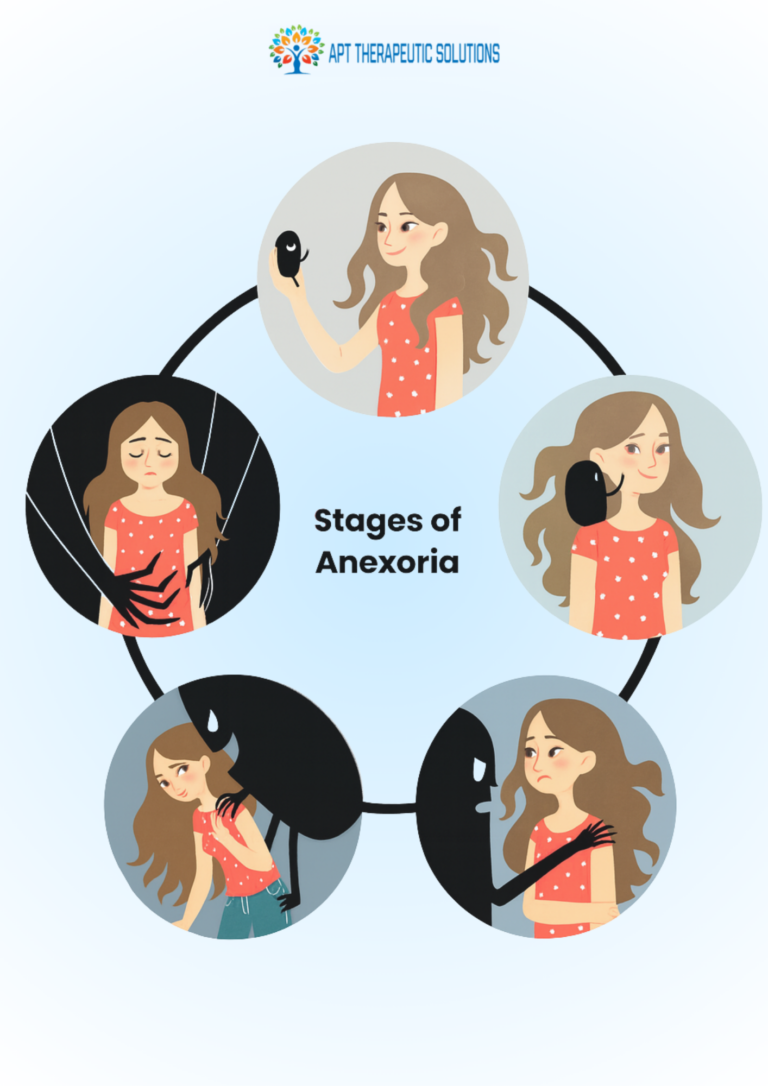
This practical and engaging worksheet introduces clinicians to a powerful visual tool for assessing an adolescent’s relationship with Anorexia Nervosa. It maps five key stages of the illness, alongside carefully designed prompts and reflective questions that support meaningful, insight-rich conversations with adolescents and their families.

More than just a worksheet, it offers a structured way to deepen understanding, build therapeutic connection, and uncover the function the illness is serving.

A free accompanying course is included, providing clear guidance and clinical insights on how to use the worksheet effectively and confidently in practice.

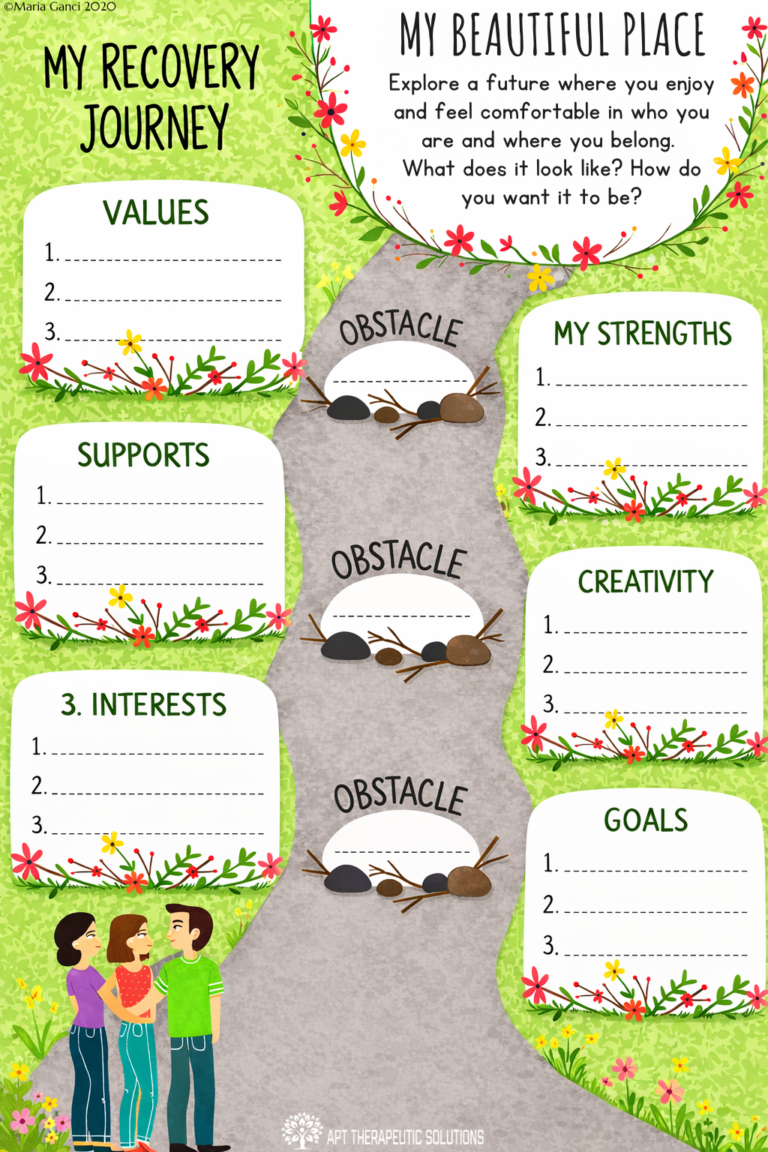
My Recovery Journey Tool

My Recovery Journey is a practical and engaging worksheet designed to help adolescents step back from the immediacy of the eating disorder and begin to view recovery as a meaningful, personal journey.
Grounded in the Becoming & Belonging Model, this tool supports young people to explore:
  • Who they want to become (identity, values, sense of self)
  • Where they want to belong (connection, acceptance, relationships)
It helps clinicians gently shift the focus from the eating disorder identity toward possibility, growth, and connection.

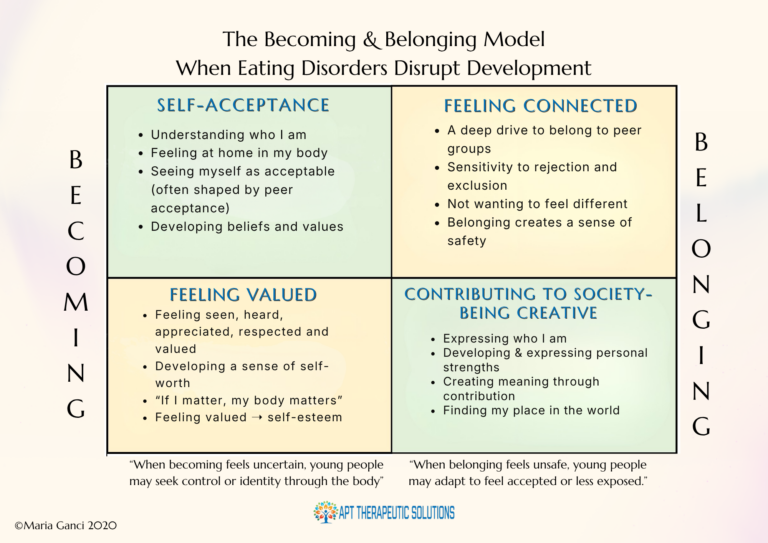
The Becoming & Belonging Worksheet

is designed to support adolescents during a critical stage of development, when questions of identity and belonging are most prominent and often most vulnerable to disruption by an eating disorder. During this period, young people are trying to understand who they are, where they fit, and whether they are valued. When these developmental tasks are impacted, eating disorder behaviours can begin to serve a powerful function, offering a sense of control, identity, or acceptance.

This worksheet provides clinicians with a structured and meaningful way to explore these underlying domains with adolescents. It helps young people recognise how the eating disorder
may be interfering with their development and supports them to reconnect with a more authentic sense of self-worth, and belonging.

Focusing on these areas is essential for long-term recovery. When clinicians move beyond symptom management and begin to address the developmental needs beneath the eating
disorder, they create opportunities for deeper, more sustainable change. This framework supports adolescents not only to recover, but to continue their journey of becoming and
belonging in a healthier and more integrated way.

Shopping Cart